In today's digital landscape, website performance directly impacts both conversion rates and search rankings. A search engine optimization campaign can fail simply because a website loads too slowly. Below, we'll cover key strategies to achieve top PageSpeed grades.
1. Optimize Core Web Vitals (LCP, FID, CLS)
Largest Contentful Paint (LCP) measures loading performance. To improve LCP, optimize critical images, eliminate render-blocking resources, and leverage modern browser caching methods. Cumulative Layout Shift (CLS) measures visual stability. Ensure all media sizes are explicitly declared to prevent visual jumps during painting.
"A 1-second delay in page load time can reduce conversions by up to 7% and lead to a significant drop in organic search visibility."
2. Leverage Advanced Server Caching
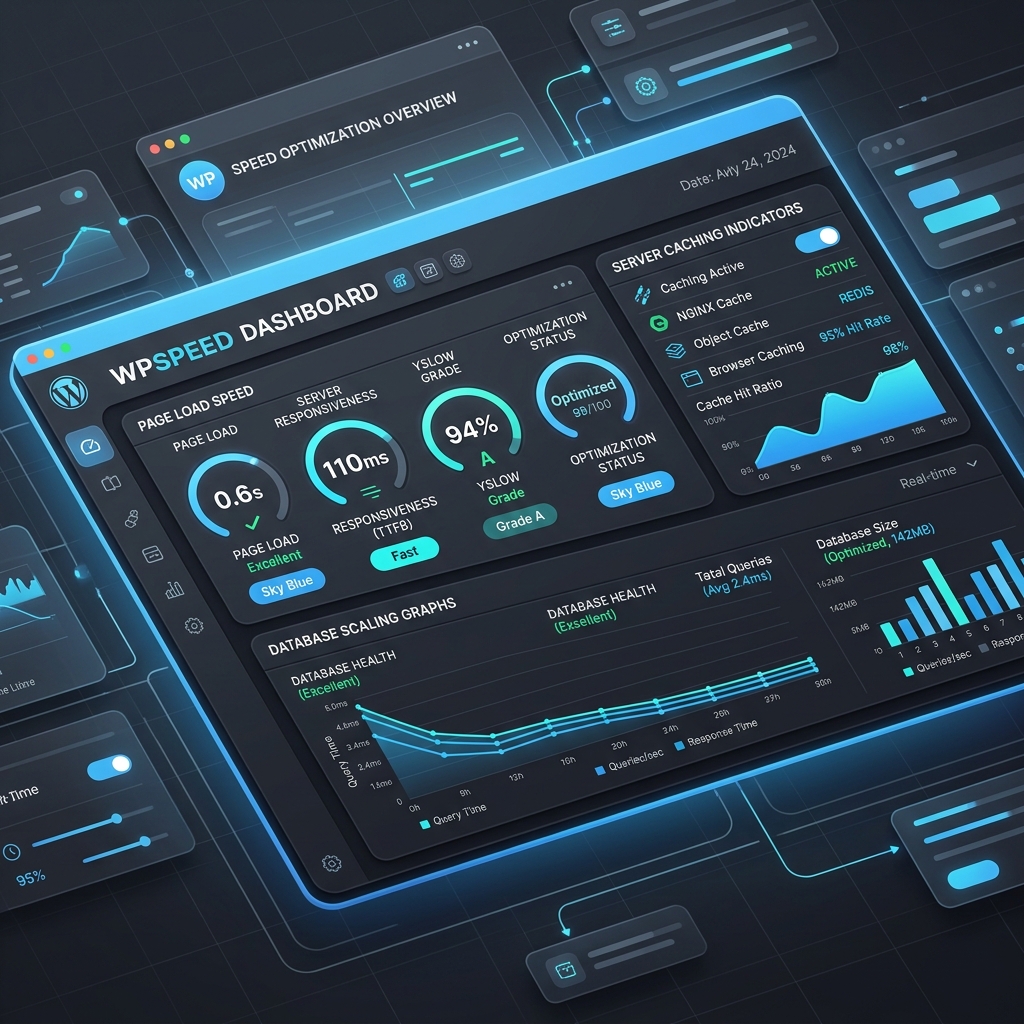
Static HTML page caching (e.g., Nginx FastCGI cache) bypasses expensive PHP database queries, delivering immediate response times. To take caching further, implement Redis or Memcached object storage pools to speed up core WordPress runtime execution and API call processing.
3. Modern Assets Chunking & CDNs
Convert legacy PNG and JPG assets into next-generation formats like WebP or AVIF. Set up dynamic asset CDNs (Cloudflare, BunnyCDN) to cache static code scripts close to your visitors. Additionally, make sure to minify all JavaScript and CSS files to reduce bandwidth requirements and speed up initial render times.